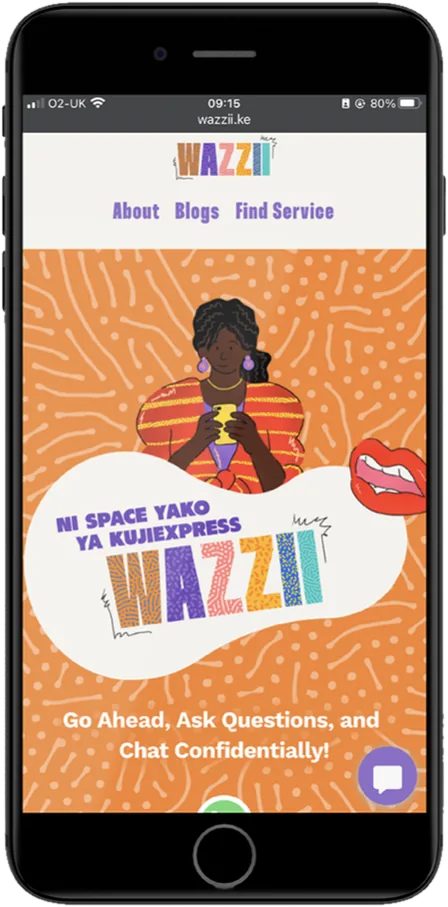
Girl Effect · 2018 to now · South Africa, Kenya & India
AI Health Chatbots
Building AI that young people trust with their hardest questions.
My role
Product & design, 0 to 1Built on 15 years of research and design with young people. Designed slowly, on purpose.AI & infrastructureThe move to GenAI and our LLM stackSafetyGuardrails, safeguarding and ethical AI guidelinesTeamsNairobi, Johannesburg, Cape Town, Delhi, Mumbai and the UK
The brief
Give young people somewhere safe to ask what they can't ask a parent, a teacher or a nurse. And make sure a real person is there when an answer isn't enough.
The journey
From 10 questions a quarter→100,000 a day
2013 · RwandaBy hand
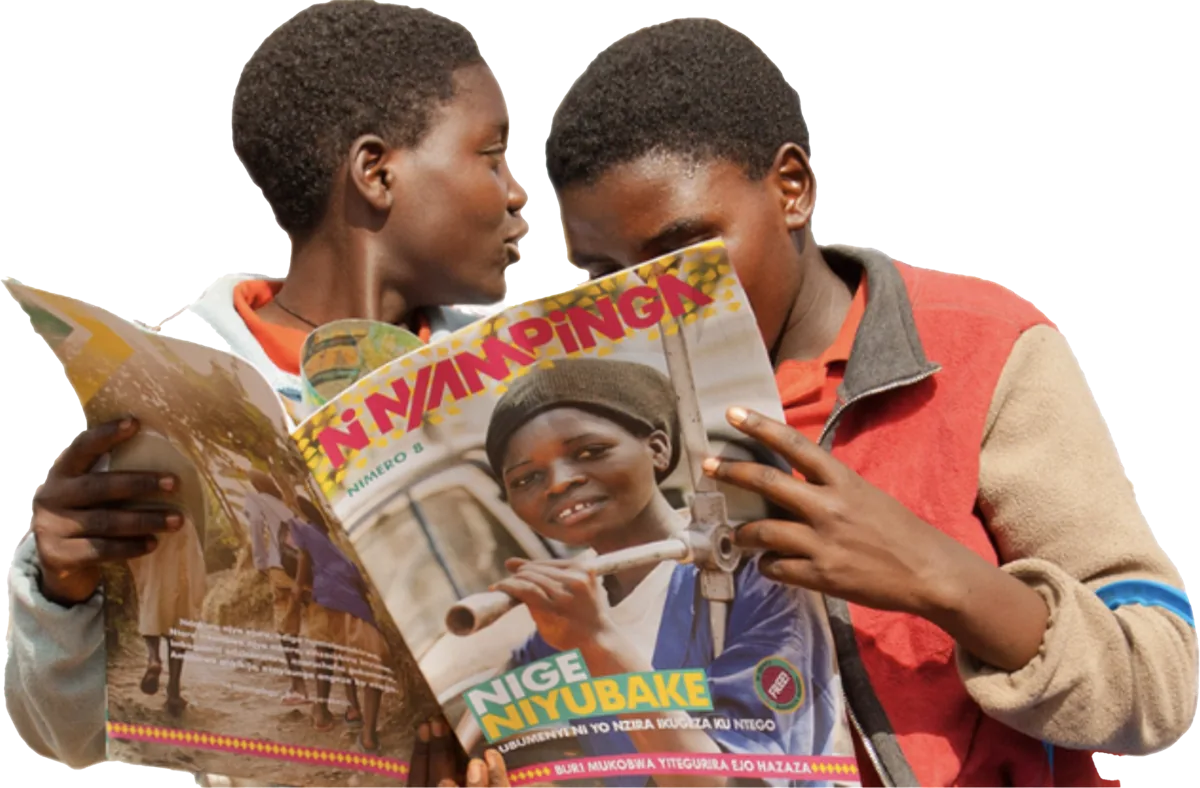
It started with Baza Shangazi, an Ask Auntie column. Young people wrote in, and real people wrote back.
2013 to 2015 · Rwanda & MalawiOn air
The column grew into a text-in radio show. Questions arrived by SMS and were answered on air.
2016 to 2017 · GlobalMobile site
The questions, and the answers, moved onto phones, ready any time of day. Free to access through our partnership with Facebook Free Basics.
2018 · South AfricaThe first chatbot
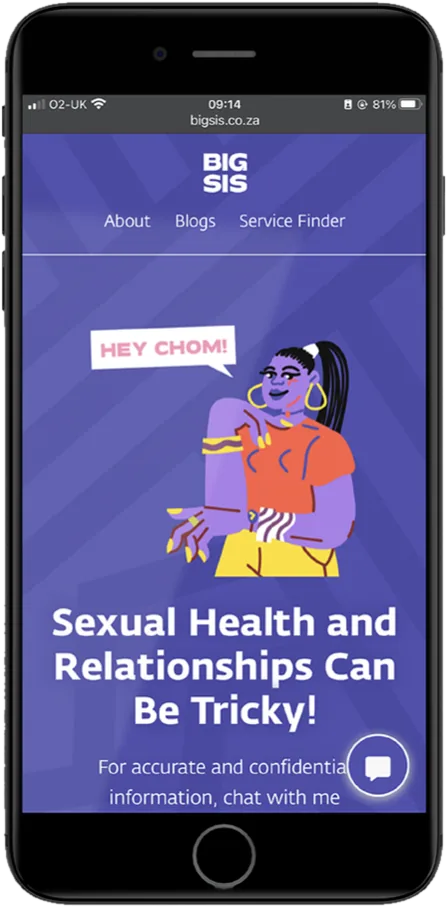
Built on years of real questions, so it spoke the way young people actually do.
Today · India, Kenya & South AfricaGenAI, with humans
Guardrails throughout, trained people a tap away. Up to 100,000 questions answered daily.
Three decisions that shaped it
01Start with the questions, not the tech
Long before AI, we were answering young people by hand, through an Ask Auntie column and a text-in radio show in Rwanda. Those years of real questions became our foundation, and later the test sets we use to check the AI.
02Design the handoff first
I'm always going to bang this drum: automated answers alone are never enough. We built every chatbot around the moment a trained person steps in, and the route to real care after that.
03Meet them in their own words
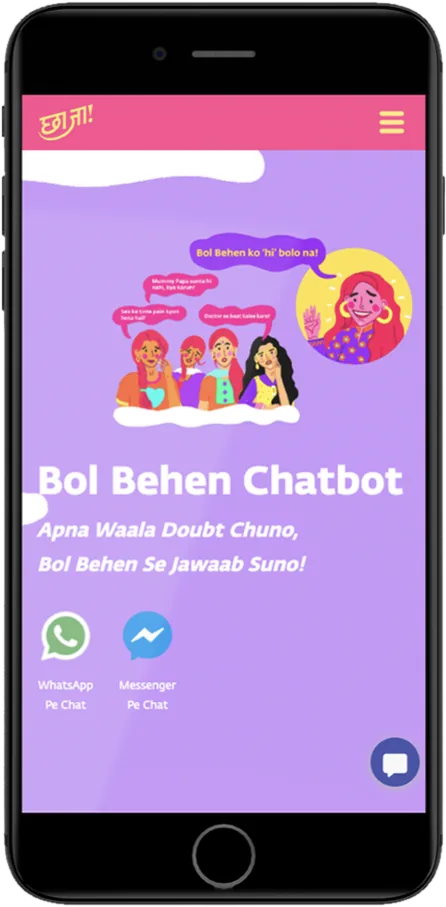
Nobody texts in textbook English. We built for the way young people really write, from Sheng in Nairobi to Hinglish in Delhi, so no one has to translate a worry to be heard.
The human behind every chatbot: a trained health worker
Today, one of the largest AI health deployments across Africa
6. Frontier AI models Several best-in-class models.
How we mitigate risk
Co-created with young people and communities. Continuous expert oversight.
Evidence-based information only, made for local contexts and languages.
Filters catch issues before they reach a young person.
Real people. Real support. The right care at the right time.
We test, measure and learn in every conversation.
End-to-end encryption. Minimal data. Built for trust.
AI can't replace human care. But with the right guardrails, it can help more young people get the support they need, when they need it.
What I've learned
A chatbot alone is not the strategy.The biggest gains came when chat was layered with face-to-face outreach. People meet regularly, and the chatbot carries them in between.
Private doesn't mean risk-free.We collect as little as we possibly can, and keep trained humans watching the edges.
Trust lives in small moments.A reply that sounds like a friend. A handoff that actually happens. Get those right and young people come back.
Recognition
Yale School of Public HealthTaught as a case study, 2025
Stanford Center for Digital HealthFeatured in its GenAI for health white paper, 2025
Fast CompanyWorld Changing Ideas winner for WAZZII, 2025